This list will likely shift a bit. I don't consistently keep track of films watched, so what is below is an assuredly incomplete picture of this year's docs I saw this year. A couple of them could likely be classified 2009 or before, some maybe not 2011, but there it is. Also, the blurbs below a quick memory recalls, I'm not working off notes, so I might be more off than usual :)
Best of the year. Easily.
SWEETGRASS
 |
| Sweetgrass |
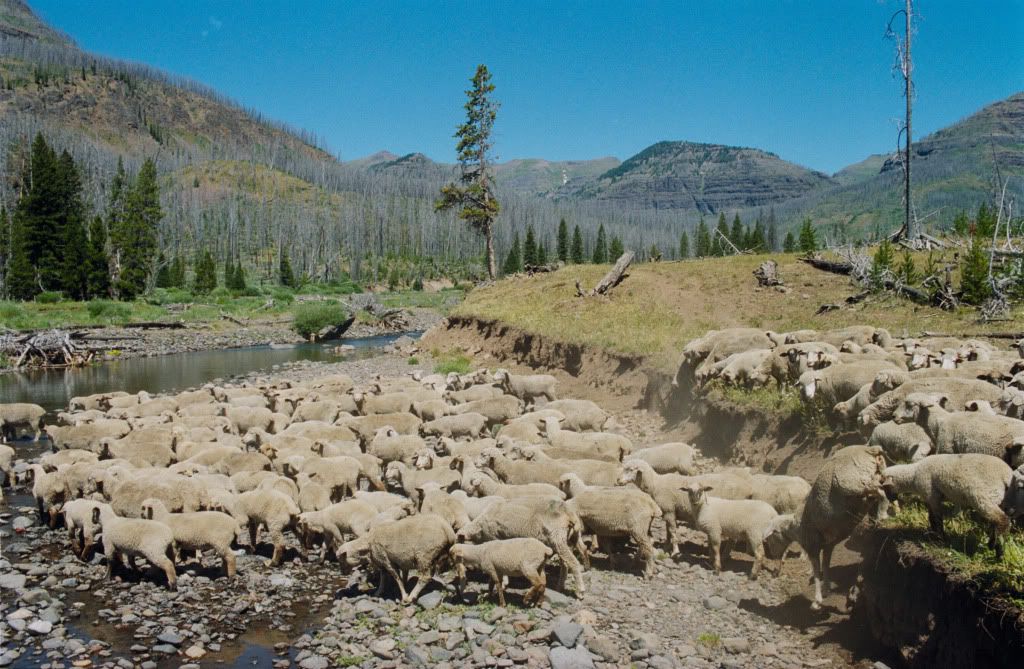
The simple narrative is an obvious metaphor for cultural loss; everything about this film works so amazingly with such a minimal palette. A Mark Rothko composition throughout shifts fields of murky whites, greys, browns, and greens. The narrative and visual minimalism is echoed with a sound design of minimal human voice that is typically quiet, staticky (through walkie-talkies), abrupt, and rarely immediate to a listener, sheep bahs are more present than human voice. Hauntingly beautiful.
 |
| 45365 |
 |
| Disorder |
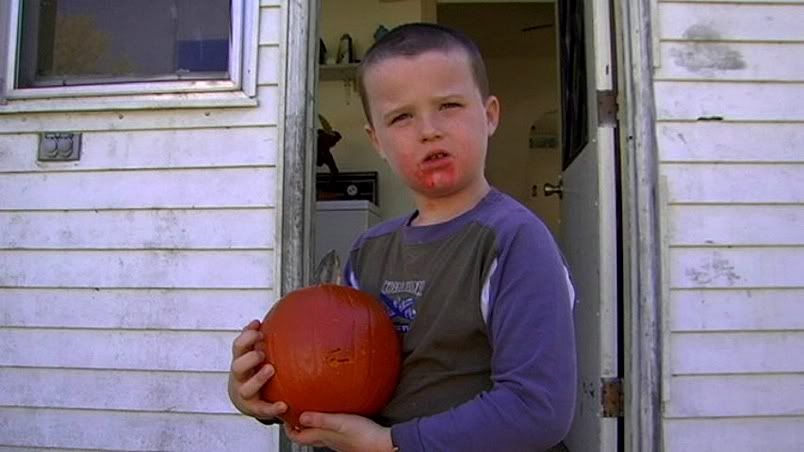
45365 is a look at a small Ohio town directed/constructed by two locals (good luck with your follow-up, fellas) seeming to paint a somewhat bleak picture of small town America. I'm not sure if the somewhat depressing portrait is a commentary on American economic decline or a market-driven attempt to sell a Springeresque community of curiosities, but it was a pretty fun trip.
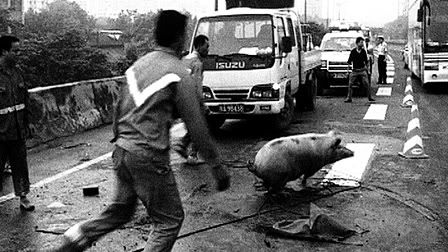
DISORDER, dystopian in spades, is a Chinese doc that compiles black & white footage from several cameras to suggest society in a downward spiral of lawless chaos. The two folks I saw this with, one an art school teacher, thought the construction was immature and excessively obvious. DISORDER doesn't seem to expose the viewer to any upper-class elements of Chinese society, perhaps suggesting that we lower-class remnants are the ones that will be left to chase scraps.
 |
| Utopia in Four Movements |
My exceptionally high expectations for
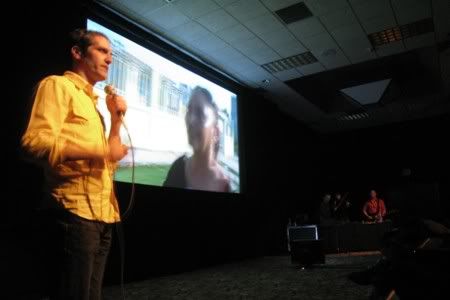
UTOPIA IN FOUR MOVEMENTS went unmet (as was the case for several others who I attended the screening/performance with). Perhaps it was my appreciation for director Green's previous work on THE WEATHER UNDERGROUND or perhaps it was the promise of an interactive space shared by creators and audience, whatever it was, the event is best described as a performed power-point (though I understand the events with live music were more successful). That said, it is still a highlight from my year in docs for what it suggested as possible.
 |
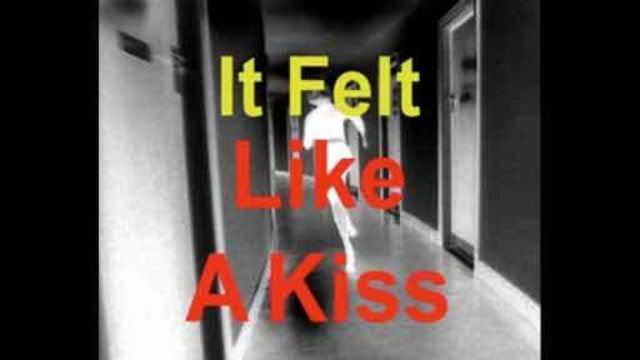
| It Felt Like a Kiss |
Another formally nontraditional and noteworthy doc was Adam Curtis'
IT FELT LIKE A KISS. A fun cruise through images of americana completely driven by a Tarantino-esque soundtrack of old pop music is just right until you give the thesis much thought. Typical of Curtis, a grand narrative structure is created and an overwhelming cache of "evidence" is distilled into a fairly broad "argument". Nonetheless, a fun trip of archival construction.
 |
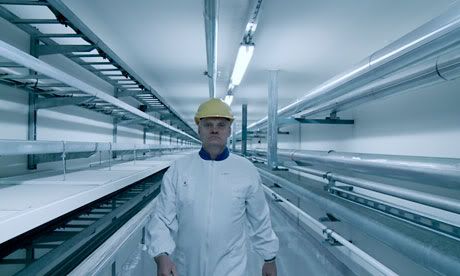
| Into Eternity |
INTO ETERNITY is a magnificently shot reflection on nuclear waste, and more interestingly, about how communication might work between cultures divided by a gigantic temporal/cultural lapse. Though the compositions are often stunning, the film suffers from a sense that the entirety of the project is driven by formally balanced compositions with vibrant color schemes. The more interesting question of communication is handled sloppily with too much repetition of basic ideas and a limited array of talking heads. The questions about nuclear waste proper feel brushed aside due to the film's aesthetics as well as silly narration punctuating the film. Worth a look, but ultimately disappointing.
 |
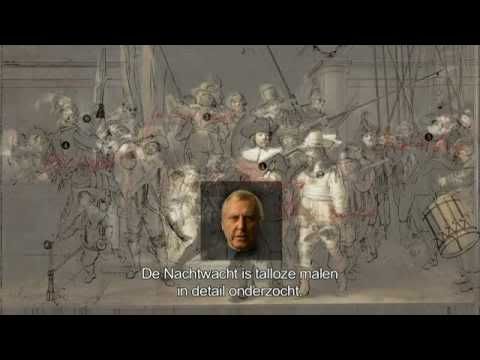
| Rembrandt's J'Accuse |
REMBRANDT'S J'ACCUSE (though I am again uncertain when I saw this (was it 2009?)) is probably my second favorite film listed here. The film is a fantastic analysis/deconstruction of Rembrandt's
The Night Watch - this should be a must for all high school/college students to understand the elements of visual analysis/media literacy.
THE COVE does a great job of selling a "left argument" (because - horror - it doesn't support an unregulated dolphin market or deceitful government) by both following a personal story as well as creating an action adventure documentary.
GasLand, another personal story, here the activist-narrator-director Josh Fox road-trips The States to illustrate the pervasiveness of problems linked to natural gas exploration (in the form of fracking). Fox has an Arlo Guthrie-esque populist appeal reinforced by his conversations with "normal folk" that are experiencing problems due to Big Energy doing what it wants, where it wants.
NO CROSSOVER: THE TRIAL OF ALLEN IVERSON was a compelling look at how sports permeates society and how (primarily) race and (to an extent) class inform our daily interactions. James not only revisits a high school court case involving Allen Iverson with the archive of local and national feedback, but also talks to contemporary town residents (his hometown, notably leaning on his father) to underscore how something nearly 20 years old continues to define many lives today.
WASTE LAND - a look at Brazillian born US artist Vik Muniz and his project in the world's largest garbage dump in his homeland near Rio. The most emotionally wrenching of the bunch, also giving us the problematically uplifting narrative strands that the film is seemingly aware of as it is rooted in class (and "first world" vs "third world") commentary - a must see.
LAST TRAIN HOME, year-end favorite, is a solid, though fairly obvious, doc that looks at the pressures of globalization on a Chinese family. Age-old Salt of the Earth predicament of the weaker getting picked-on and pressured by the also-but-not-as-weak. Here, the middle generation of three has left the countryside - as much of the country has, we are led to believe - to work in a factory-town effectively on another planet.
THE OATH, another key year-end favorite, is an interesting enough story but it left me cold. I think it was early in its festival life that I heard someone say something about THE OATH also being an oath between film-maker and subject, I didn't get that at all, and perhaps that expectation sitting in the back of my mind generated
some sense of disappointment. Here, the story unnecessarily leaves Jandal to occasionally tie-in to Hamdan, and sure their connection seems ripe, but I was unconvinced that it added anything.
RESTRPO, kissing cousin of THE OATH and a lesser year-end favorite, is another underwhelming doc that I can't quite figure the love for. Certainly the general circumstance of the film is interesting, in a sadistically voyeuristic kind of way, but the film itself otherwise offers nothing new or special. The film contains everything one would expect of such a film, offered in exactly the way that it would be expected to be delivered. As "embedded journalists" have the all the rage since Gulf War I, I'm not convinced that aspect of RESTRPO makes any commentary on that fact or offers anything new. Instead we are left with a mutedly jingoistic portrait of soldiers at war - muted warts and all.
WILLIAM KUNSTLER: DISTURBING THE UNIVERSE. I'm not sure if the mood hit me just right for this one, but I found this a powerfully well-told personal and social story. I keep meaning to revisit this one as I came out of the theatre in love, but my memory of the picture proper is a bit foggy, I reckon it had something to do with a romantic representation of doing social justice work, doing the work with movements of others, and getting some results. Today, that kind of activism seems to be left to Ditto-heads and Tea-baggers.
CATFISH is one of the few docs that I find morally reprehensible. The makers want us to believe that their citified ways leave them naive enough to believe that (a) the person on the other side of an internet connection might not be who they purport to be <GASP>, and (b) that the audience is gullible enough not to question this as a stunt. The immorality of it all comes in as they set-up "a simple woman and her simple family" as suckers to play out the premise. Not since CAPTURING THE FRIEDMANS has such an abomination garnered so much praise and attention. Disgusting.
I'M STILL HERE - for some reason I was quite charmed by the Affleck/Phoenix film. I think I wanted to believe less of it was a set-up than it probably was, but it is still a damning - though obvious - report on celebrity culture. There is an element of
who cares? to all of it and the subtext of complaint that the famous ought to be left alone to live their lives in peace is irritating - I don't imagine it would hold up well to repeat viewing.
EXIT THROUGH THE GIFT SHOP is a more nuanced version of the previous two films - the creation of celebrity and glass-house nature of wealth and status. This is another film that I don't have a very good recall of, I remember enjoying it, but with some heavy reservations, though I'd imagine it would hold up fairly well.
VIDEOCRACY (skipping back a moment to I'M NOT HERE) offers a similar cultural critique of celebrity culture, but this time of Italy's tee-vee empire of President Burlusconi - the pop politics of empty-headed followers of empty rhetoric and empty promises. The film seems to want to make the case that we are on the edge of a society that looks similar to Mike Judge's IDIOCRACY. While marginally entertaining, it doesn't do a very good job of making or sustaining an argument, and several organizing themes play out exceptionally weak.
THE MIRROR - I'm not sure it was very good, but there was something about its mood that continues to resonate. A film about a small, Italian, mountainous community that decides to install a giant mirror to bring some extra light into their otherwise sun-challenged location. We get a glimpse of some town personalities and sub-communities, but not in an illuminating way. Just something about this one, probably tied into an idea of hopefulness and community, but I'm not very confident in recommending it.
BOXING GYM - of the four portraits of place (SWEETGRASS, 45365, and DISORDER), I think this one was the least interesting and most obvious, though solid, and sometimes profound. I think I'll soon do a Wiseman immersion and comment more fully on his body of work.
CROPSEY does a nice job of not spelling everything out, while the film-makers suggest at points their own "Cropsey"
is a "bad guy", they leave the question open enough to allow us to question the mean-making going on with a varied pool of subjects.
AND EVERYTHING IS GOING FINE was fine. The problem was expectations were at least there for something better-than-average coming from Soderbergh looking at Spalding Gray. The doc is a matter-of-fact editing together of archival material (personal and public) of Gray, Soderbergh seemingly wanting to leave himself out as much as possible. Unfortunately, Gray's widow spoke after the screening I attended and it felt that the film was conceived by her as a marketing ploy to make Gray's legacy more monetizable and her admitting that she had approached other "higher profile" directors (Scorsese, I believe was mentioned) made it seem that Soderbergh perhaps took the project as a favor to the deceased and perhaps to slow the seemingly self-interested widow. Drag.
THE INVENTION OF DR. NAKAMATS was an uninteresting and poorly constructed look at the Japanese inventor. At least there was some decent title-work (though that was somewhat irritating as the rest of the film was so poor that it seemed that the fact of a good bit of title-work had justified the visibility of this film).
This small group of docs did little for me, though they all had worthwhile attributes, probably in this order:
NoBody's PERFECT,
PRODIGAL SONS,
TAPPED, FLOORED, and
DEFAMATION.
My last film to note is one of two docs this year that I actively disliked, the aggresively hipsteresque and utterly self-congratulatory
THE RED CHAPEL. I had meant to write a diatribe against this when I saw it but decided it would be a waste of my time for something so worthless.
I'm sure I am forgetting many films I wish I would have seen to add for consideration but few are coming to me. MARWENCOL, THE ARBOR, THE KIDS GROW UP (love Block's 51 BIRCH, am probably on of few who prefers Block to McElwee), 12th & DELAWARE, JACKASS 3D, also two Bennings came through town this year that I missed - RR and RUHR (which may or may not be considered 2010s).
With this little exercise in reflection I am noticing that I thought little of many films that many thought much of. While there is the possibility I am hyper-critical and/or missing something, it occurs to me that many of these lists are coming from folks in the profession - film-makers, festival wonks, even some more established critics. It seems that there might be an element of self-promotion/self-sustaining in spreading the love out so thinly. Also, it might be the case that many of these folks are so immersed in so many films that the sheer volume of mediocre film they are exposed to creates a stockholm syndrome effect where they begin to believe that the top films are actually good because the mediocre films are so many.
Roughly:
****sublime****
SWEETGRASS
***noteworthy/very good***
Rembrandt's J'Accuse
45365
Waste Land
William Kunstler: Disturbing the Universe
Utopia in Four Movements
**solid/good/maybe-even-very-good**
Last Train Home
The Cove
Boxing Gym
Disorder
It Felt Like a Kiss
Exit Through the Gift Shop
GasLand
Cropsey
*good, though with substantial problems*
I'm Still Here
Into Eternity
No Crossover: The Trial of Allen Iverson
The Oath
The Mirror
And Everything Is Going Fine
Restrepo
1/2*pedestrian1/2*
NoBody's Perfect
Prodigal Sons
Tapped
Floored
Defamation
Videocracy
-very troubled-
The Invention of Dr. Nakamats
--just plain bad--
The Red Chapel
---immoral---
Catfish
Perhaps I will write more on (some of) these later.