i have a draft on Herzog that will remain unfinished for a bit, but having just finished BROTHER'S KEEPER i wanted to revisit the basic idea - i think Herzog is cruel*. a while back i happened to pair GRIZZLY MAN and THE WILD PARROTS OF TELEGRAPH HILL (i don't recall the level of consciousness about it). it occurred to me that PARROTS had many elements that might attract Herzog - likewise here, with KEEPER - but it seems also obvious that if he had worked either of these projects, he would have belittled the subjects, as he does with Treadwell. both films would have been turned from beautiful portraits ethically told to quirky canvases for Herzog to pontificate about this or that, co-centering himself with the ostensible subjects. it is somewhat shocking to me that Michael Moore is jeered with slurs of being self-congratulatory and self-aggrandizing while Herzog is not. i guess we must wait for Herzog to get fat or politically leftist
* i've been called out on twitter by Robert Greene, via his prewarcinema handle, that Herzog is not cruel, not a 'humanist' film-maker, and follows different interests. perhaps my calling Herzog out as cruel is sensational, but as above, i am suggesting that he is not interested in making the types of films - à la PARROTS or KEEPER - that are loving and humane. that if we put our Herzog filters on the stories and characters of these two films it is not difficult to imagine VERY different outcomes. clearly Herzog is after something different, that is my point. the question becomes what then is he after and what value does it have? my current short answer is that his project is largely narcissistic and that the moments of curiosity he displays don't get us very far - certainly not as far as he, and many of his adoring fans, might suggest. (keeping in mind that the stakes are low for this critique :)
Monday, February 21, 2011


Friday, February 4, 2011
FAMILY AFFAIR: or, Oprah's Family Affair?
I just caught FAMILY AFFAIR at the Siskel last night, with about 12 other people, on the second night of its two-night engagement. Granted, it was cold and a day-or-so after Chicago's (over-hyped) Snowpocalypse, also it screened in Siskel's late slot, 8:15.
The film is about...The film's plot tracks the brother-filmmaker, Chico Colvard, talking to his three older sisters (whose names I forget and are conspicuously absent from the film's website) about their youths defined by years (16 to 9, depending on the sister) of rape and physical abuse by their father. More importantly, the film tries to examine how it is that all three sisters continue to have a relationship/contact with the the father that terrorized them.
There were a few stretches of film where I wondered why the material was left in, it just wasn't working for the film he seemed to be trying to make. During the credit-roll, I noticed the OWN tag from Oprah. I felt some of my questions were answered. With Oprah's book club, there was the sense that Chosen Books were middling; that Serious Authors would snub the stigma of being attached to such a Tastemaker. With FAMILY AFFAIR, there is a sense that a good film might lurk somewhere in what is presented - and the film is fine - but what we get is a fairly milquetoast (yes, even with this plot-line) presentation of material. This is not to say something more sensational is what I was looking for, I was looking for something good, even grand.
Why such high expectations, you ask. Of course, thank you for asking. The film had a pull-quote from the Boston Globe:
On a shortlist of traits my partner would attribute to me, fretting would be one, so take this all with a grain of salt. Is it too early to worry about possible negative impacts Oprah's doc initiative will have on documentaries? Though I know these reviews were from well before OWN picked-up FAMILY AFFAIR, is it too fretful to worry that some reviewers might begin to write excessively praising reviews of certain docs merely because of some perceived benefit of stroking Oprah's projects? Is it too fretful to worry that otherwise good documentarians will begin contracting work with OWN and then creating the milquetoast offerings many of us fear OWN will likely support? Is it too fretful to worry that an already limited amount of screens for documentary will become increasingly booked with OWN offerings? (Though connected to the Oprah machinery, Siskel or FAMILY AFFAIR didn't seem to benefit from increased attendance - will this be the case in the future?) Certainly the industry-as-a-whole will benefit from the influx of money for new jobs and projects. And perhaps Oprah's new LA location offers Karina Longworth an additional solution for her LA indie-troubles. But I still fret. What will happen to documentary? What will people think of documentary now?
And yes, I'll admit that my frets are typically just that.
The film is about...The film's plot tracks the brother-filmmaker, Chico Colvard, talking to his three older sisters (whose names I forget and are conspicuously absent from the film's website) about their youths defined by years (16 to 9, depending on the sister) of rape and physical abuse by their father. More importantly, the film tries to examine how it is that all three sisters continue to have a relationship/contact with the the father that terrorized them.
There were a few stretches of film where I wondered why the material was left in, it just wasn't working for the film he seemed to be trying to make. During the credit-roll, I noticed the OWN tag from Oprah. I felt some of my questions were answered. With Oprah's book club, there was the sense that Chosen Books were middling; that Serious Authors would snub the stigma of being attached to such a Tastemaker. With FAMILY AFFAIR, there is a sense that a good film might lurk somewhere in what is presented - and the film is fine - but what we get is a fairly milquetoast (yes, even with this plot-line) presentation of material. This is not to say something more sensational is what I was looking for, I was looking for something good, even grand.
Why such high expectations, you ask. Of course, thank you for asking. The film had a pull-quote from the Boston Globe:
One of the most psychologically complex movies ever made about either racial identity or abuse of any kind.Needless to say, the film does nothing to approach such a claim. It turns out the review is from Wesley Morris, protected by a pay-wall, though in his capsule reviews for Boston's Independent Film Festival he adds the film is a "nearly perfect documentary" and is "provocative and shocking in the way that a piece of nonfiction ought to be." Again, the film I saw does not resonate with what Morris here reports, though we get a sense of how he judges exceptional documentary - not a rubric I'd subscribe to. Which brings us back to Oprah. If you know Oprah as little as I do, you probably still understand how the brief description above has Oprah written all over it - which is not necessarily bad, but probably is easy.
On a shortlist of traits my partner would attribute to me, fretting would be one, so take this all with a grain of salt. Is it too early to worry about possible negative impacts Oprah's doc initiative will have on documentaries? Though I know these reviews were from well before OWN picked-up FAMILY AFFAIR, is it too fretful to worry that some reviewers might begin to write excessively praising reviews of certain docs merely because of some perceived benefit of stroking Oprah's projects? Is it too fretful to worry that otherwise good documentarians will begin contracting work with OWN and then creating the milquetoast offerings many of us fear OWN will likely support? Is it too fretful to worry that an already limited amount of screens for documentary will become increasingly booked with OWN offerings? (Though connected to the Oprah machinery, Siskel or FAMILY AFFAIR didn't seem to benefit from increased attendance - will this be the case in the future?) Certainly the industry-as-a-whole will benefit from the influx of money for new jobs and projects. And perhaps Oprah's new LA location offers Karina Longworth an additional solution for her LA indie-troubles. But I still fret. What will happen to documentary? What will people think of documentary now?
And yes, I'll admit that my frets are typically just that.
Monday, January 24, 2011
SHOAH: Brief, Initial, and Rough Thoughts
I experienced SHOAH Saturday for the first time at Siskel Film Center [where, unfortunately, they shipped us from the large house to the small house during intermission], here are some first thoughts I want to get down to see how they play off other people and track how they will resonate with me as the film settles.
The running time. Overlooking a running-time of 9 hours 36 minutes seems foolhardy. This is not a duration easily consumed. There is abundant material to uncover. Apparently Lanzmann & co. had about 350 hours of material to work with. Without knowing what film was left behind, or which stories were chosen not to be told, we are obviously left with what is on screen to assess the work. As a record of the Holocaust, removing the film from consideration as film, it makes perfect sense that lengthy interviews not be edited down, that personal memory be given free reign. This being the case, it seems that the running time is woefully inadequate - as an archive of Holocaust memory, all 350 hours should be accessible. As all footage is not accessible, Lanzmann's endeavor becomes one of telling a much more specific story, of his shaping a chosen narrative.
SHOAH's content. The film is wall-to-wall interviews of Holocaust survivors. Not to say that all interviewees were once held in concentration camps, instead that Lanzmann has chosen to record thoughts of people who lived through the Holocaust with, I believe, the exception of two historians. While there are interviews with people who were once in concentration camps, there are also interviews with SS or Warsaw Ghetto administrators, or townspeople near concentration camps - Lanzmann captures a breadth of reflections on lives impacted. This isn't to say that there is an attempt to get at how members of the Reich have dealt with their roles, but it is clear that these, too, are lives impacted. Which, in a sense, leads us to what seems to be part of Lanzmann's method.
There are two quotes by way of historian Raul Hilberg that seem to organize Lanzmann's film. First, at an earlier point in the film, Hilberg notes that his way of studying the Holocaust is to become mired in the details and through that we might find glimpses of the truth that we are most interested in - we cannot hope to begin by looking for this truth/these truths, that would be too unwieldy an undertaking. Clearly this is what Lanzmann hangs much on as he asks interviewees about mundane aspects of their daily lives during the Holocaust, often echoing back their answers to repeat the mundane. Second, in discussing the diary of Adam Czarniaków, head of the Warsaw Ghetto's Jewish Council, Hilberg notes that there is no mention of the evil of the Nazis as that is obvious and a useless -even immoral - discussion to be had. What is of use is the calling out of Jewish people that collaborated, and otherwise aided, the Nazis. While it may not quite accurate to claim Lanzmann has taken this as an organizing thought - he does, after all, press hard on Warsaw Ghetto second-in-command administrator Franz Grassler as well as secretly film other former SS members - the film does constantly seem to imply the question to survivors of the era what did you do? and/or why did you do what you did? While I feel that Lanzmann is suggesting some sort of Jewish complicity in the horrors of the Holocaust, though he likely would not make such a claim (and I'm not sure I stand firmly behind the strong term complicity). Nonetheless, there lingers throughout the film the question of how could this happen (to us)? and Lanzmann seems to want the "us" to better understand what happened so that it cannot happen to "us" again - a roundabout way to understand the agency suggested in the film, though I feel it resonating throughout.
Our Genocide, Our Holocaust. One of the weaknesses of the film, unfortunately, is the occasional reminder that this is the most horrible genocide in history. One of a kind. And further, that it was (predominantly) about anti-jewishness. While there is no doubt the Holocaust introduced a sickening fordist efficiency to genocide, it is not as if this was a first genocide, or necessarily a "worst" genocide. Not only did the Armenian Genocide occur earlier, have a million+ death toll, and occur just around the corner from the Holocaust, there is also the equally massive killings by the Soviets at about the same time as the Holocaust. Further, it has been argued that the blueprint of the Holocaust was actually laid by a decades-earlier trial with the extermination of disabled persons with many of the similar methods later used by the Nazis. Of course, there were also the massive amounts of non-jewish victims of the Holocaust that were also deemed unwanted by the German State, some of whom are noted, though in a seemingly downplayed fashion, as death house captives (communists, unionists, freedom fighters, etc.). All of this to say that the film suffers a small amount from grand claims and myopic focus, neither of which is a problem in itself, just together they create a friction of Lanzmann's design that I understand as a rhetorical weakness of the film as a specific narrative.
What does work fantastically is the tactic of not translating the speech of speakers that are being translated in the filmic world. For example, when Yiddish is spoken, there is a pause in translation before the translator (sometimes) on-screen translates for the French-speaking interviewer-filmmakers. I found the effect of this pause interesting in two ways. First, and perhaps most obviously, if the audience is busy reading the screen's text, they are not paying full attention to the speaker's facial features, which is a key component of the power the film is documenting. Second, is the notion that SHOAH is importantly about historical memory and the translation and reiteration of that memory for future generations. The act of allowing the speakers to speak, then having the translators re-tell the speakers' recollections and stories, is an instance of the film itself performing the cultural passing desired. Further, and perhaps a somewhat perverse suggestion, by having many of these speakers remain untranslated there is a remove of voice that allows the interesting possibility that the truth value of a speaker's claim might not be challenged, instead a problem can be assumed to be with translation and not original.
I previously wrote that there was something Michael Moore-like about SHOAH, and I suspect it has to do with a committed moral project driven by a strong and present author, but there also seemed to be some of the I-know-better-than-you badgering smugness. Not that I think this is a problem, more that I was surprised to find such a similarity. Significantly though, what differentiates the two is a lack of soundtrack (for the most part) and a lack of emotional rhetoric - which are likely tied to some degree. On the latter point, I was struck by how unemotional I was throughout the entire film. It seemed to me that Lanzmann wasn't interested in going for "the easy" hooks of grizzly archival footage, or even grizzly stories told, instead creating an atmosphere of reflection.
Hopefully I will return to writing on SHOAH in the next few days, while also doing a better job of organizing my thoughts.
The running time. Overlooking a running-time of 9 hours 36 minutes seems foolhardy. This is not a duration easily consumed. There is abundant material to uncover. Apparently Lanzmann & co. had about 350 hours of material to work with. Without knowing what film was left behind, or which stories were chosen not to be told, we are obviously left with what is on screen to assess the work. As a record of the Holocaust, removing the film from consideration as film, it makes perfect sense that lengthy interviews not be edited down, that personal memory be given free reign. This being the case, it seems that the running time is woefully inadequate - as an archive of Holocaust memory, all 350 hours should be accessible. As all footage is not accessible, Lanzmann's endeavor becomes one of telling a much more specific story, of his shaping a chosen narrative.
SHOAH's content. The film is wall-to-wall interviews of Holocaust survivors. Not to say that all interviewees were once held in concentration camps, instead that Lanzmann has chosen to record thoughts of people who lived through the Holocaust with, I believe, the exception of two historians. While there are interviews with people who were once in concentration camps, there are also interviews with SS or Warsaw Ghetto administrators, or townspeople near concentration camps - Lanzmann captures a breadth of reflections on lives impacted. This isn't to say that there is an attempt to get at how members of the Reich have dealt with their roles, but it is clear that these, too, are lives impacted. Which, in a sense, leads us to what seems to be part of Lanzmann's method.
There are two quotes by way of historian Raul Hilberg that seem to organize Lanzmann's film. First, at an earlier point in the film, Hilberg notes that his way of studying the Holocaust is to become mired in the details and through that we might find glimpses of the truth that we are most interested in - we cannot hope to begin by looking for this truth/these truths, that would be too unwieldy an undertaking. Clearly this is what Lanzmann hangs much on as he asks interviewees about mundane aspects of their daily lives during the Holocaust, often echoing back their answers to repeat the mundane. Second, in discussing the diary of Adam Czarniaków, head of the Warsaw Ghetto's Jewish Council, Hilberg notes that there is no mention of the evil of the Nazis as that is obvious and a useless -even immoral - discussion to be had. What is of use is the calling out of Jewish people that collaborated, and otherwise aided, the Nazis. While it may not quite accurate to claim Lanzmann has taken this as an organizing thought - he does, after all, press hard on Warsaw Ghetto second-in-command administrator Franz Grassler as well as secretly film other former SS members - the film does constantly seem to imply the question to survivors of the era what did you do? and/or why did you do what you did? While I feel that Lanzmann is suggesting some sort of Jewish complicity in the horrors of the Holocaust, though he likely would not make such a claim (and I'm not sure I stand firmly behind the strong term complicity). Nonetheless, there lingers throughout the film the question of how could this happen (to us)? and Lanzmann seems to want the "us" to better understand what happened so that it cannot happen to "us" again - a roundabout way to understand the agency suggested in the film, though I feel it resonating throughout.
Our Genocide, Our Holocaust. One of the weaknesses of the film, unfortunately, is the occasional reminder that this is the most horrible genocide in history. One of a kind. And further, that it was (predominantly) about anti-jewishness. While there is no doubt the Holocaust introduced a sickening fordist efficiency to genocide, it is not as if this was a first genocide, or necessarily a "worst" genocide. Not only did the Armenian Genocide occur earlier, have a million+ death toll, and occur just around the corner from the Holocaust, there is also the equally massive killings by the Soviets at about the same time as the Holocaust. Further, it has been argued that the blueprint of the Holocaust was actually laid by a decades-earlier trial with the extermination of disabled persons with many of the similar methods later used by the Nazis. Of course, there were also the massive amounts of non-jewish victims of the Holocaust that were also deemed unwanted by the German State, some of whom are noted, though in a seemingly downplayed fashion, as death house captives (communists, unionists, freedom fighters, etc.). All of this to say that the film suffers a small amount from grand claims and myopic focus, neither of which is a problem in itself, just together they create a friction of Lanzmann's design that I understand as a rhetorical weakness of the film as a specific narrative.
What does work fantastically is the tactic of not translating the speech of speakers that are being translated in the filmic world. For example, when Yiddish is spoken, there is a pause in translation before the translator (sometimes) on-screen translates for the French-speaking interviewer-filmmakers. I found the effect of this pause interesting in two ways. First, and perhaps most obviously, if the audience is busy reading the screen's text, they are not paying full attention to the speaker's facial features, which is a key component of the power the film is documenting. Second, is the notion that SHOAH is importantly about historical memory and the translation and reiteration of that memory for future generations. The act of allowing the speakers to speak, then having the translators re-tell the speakers' recollections and stories, is an instance of the film itself performing the cultural passing desired. Further, and perhaps a somewhat perverse suggestion, by having many of these speakers remain untranslated there is a remove of voice that allows the interesting possibility that the truth value of a speaker's claim might not be challenged, instead a problem can be assumed to be with translation and not original.
I previously wrote that there was something Michael Moore-like about SHOAH, and I suspect it has to do with a committed moral project driven by a strong and present author, but there also seemed to be some of the I-know-better-than-you badgering smugness. Not that I think this is a problem, more that I was surprised to find such a similarity. Significantly though, what differentiates the two is a lack of soundtrack (for the most part) and a lack of emotional rhetoric - which are likely tied to some degree. On the latter point, I was struck by how unemotional I was throughout the entire film. It seemed to me that Lanzmann wasn't interested in going for "the easy" hooks of grizzly archival footage, or even grizzly stories told, instead creating an atmosphere of reflection.
Hopefully I will return to writing on SHOAH in the next few days, while also doing a better job of organizing my thoughts.
Saturday, January 8, 2011
The True, Real World
On December 30, 2010, truefalse tweets:
It should be clear from this summary that Bergan does not have much interest in thinking about issues of "truth", reality, or representation - some of his points are ridiculous, others merely sloppy. Perhaps for some reason this was a column he felt compelled to quickly scribble some (ill-prepared) thoughts on documentary. Either way, what is of interest is that Bergan admits, perhaps not explicitly or consciously, that the entirety of the history of film - and documentary - is defined by a tension of representation. More, that there is something about a filmmaker's intention to have the audience believe what they are seeing is real is actually meaningful. I do not know the film Bergan cites as having duped his jury, but I suspect that there is a meaningful distinction to be had in understanding the film as a documentary or as a fiction. And as is the case for some of our current crop - I'M STILL HERE, CATFISH, and EXIT THROUGH THE GIFT SHOP - there is clearly a reason that the filmmakers want to be, or pose as, documentary. We'll assume that there is more going on for Bergan than a sour grapes attitude for feeling foolish - drop the word 'documentary', it is useless. See! a panel of experts - myself included! - couldn't even distinguish "the real" from "the not real".
Richard Brody, writing for the New Yorker, responds to Bergan on the day Bergan's piece posts, dismissing Bergan's poor rhetoric - though essentially supporting his argument - by citing Pedro Costa's disgust with the term as an arbitrary impediment for the filmmaker in trying to create a certain sense of relationship between audience and filmic characters, mindful that the film and its characters reflect "the uneasy situation of the world". What then to make of this tension that posits a "documentary" as "true", but not "true" in a way that is meaningfully about being in the world (or is it being-in-the-world?).
Taking a step back, we can perhaps flesh out a problem with Bergan's collapsing fiction and documentary. As Errol Morris states in a segment of CAPTURING REALITY: THE ART OF DOCUMENTARY
Without Morris' recent Wittgenstein quote, it might have been more difficult to tease out the hang-up Morris has with truth. Instead, he perfectly set himself up to betray his misunderstanding by using, of all people, Wittgenstein. Morris' 8 Aug tweet actually exemplifies how he should be understanding Wittgenstin, and that, in turn, should ease his anxieties around 'truth', 'no truth', 'objective truth', etc. Effectively, this comes back around to Herzog's thoughts on facts, and Costa's hatred of the term documentary, that there is something other than the raw facticity that we care about, there is something about meaningfulness that is our enterprise. Wittgenstein folds back in to remind Morris, or to teach Morris, that it does not matter if we call these things "truths" or "objective truths", but that we agree to act in a way that shows we understand the matter-at-hand in the same way. The "truth" of the situation is made difficult, I believe Wittgenstein would say, when there is a breakdown in language. It isn't that we don't agree a trigger was pulled, but maybe we don't agree on the meaning of that trigger pull.
Where then does this leave us with the current anxiety concerning the is-they-is-or-is-they-ain't documentaries? Well, I think it might be most useful to pause on what it is these films seem to (want to) mean. I'M STILL HERE seems to be about an (American?) obsession with celebrity culture. The film is not about Joaquin Phoenix giving up acting to become a rap artist. When we consider the film to be more broadly a commentary on celebrity culture and the garbage-media that supports it, we should have no problem understanding this as a documentary. If we choose to understand the film as about Phoenix in the very mundane way the film depicts his actions, the film is not a documentary. But, as Morris would want to claim, "they" are wrong, there is an objective truth. The truth of the matter is that the film is about - says its filmmakers, savvier critics, etc. - celebrity culture, and not Phoenix's head getting pooped on. Until we can agree to understand the film in the same way, there will be, essentially, a breakdown in language/communication. Part two of this is, does it matter that there is a breakdown in language here? Probably not to many people. Thus, is it meaningful to say that we have some wrong people and some right people? Probably not (in many instances, at least).
Perhaps I'M STILL HERE is an easier object of inquiry for us because the filmmakers quickly admitted their project "was not real" (and Phoenix's retirement was immediately suspected to be a stunt). If we turn to look at CATFISH we have a different problem, we have filmmakers who maintain their film is true despite significant doubt from outsiders. When we return to the question of the film's subject, what it means, we might say it is about boy meets girl on internet. Or more broadly, how it is that social relationships are changing when so much community-building occurs online, and what implications this has for trusting each other as identities are manufactured, or perhaps merely tweaked, as we have a very different presence to one another (as if we don't do this outside of internet relationships). Even if we are still being deceived by the filmmakers, and the truth of the matter is actually something other than represented in the film, the truth about social relationships still stands. But, if it does turn out that the filmmakers did indeed do some googling before they represent themselves googling (and i think the assumption is of course they did), then we have a situation where they have created a film that not only misleads the audience, but portrays the film's subject in a rather harsh light. The more important truth, I believe many would feel, now becomes about how these filmmakers chose to treat people, what their project means for how we use and relate to others.
Why then does documentary matter? For the film projects noted above, it seems the easy answer is that it makes sense to market these stories as "true" both for economic gain as well as to better make a point. Imagine I'M STILL HERE, the admitted fiction-of-sorts, to have been created as a Christopher Guest-style mockumentary. How would that have meant differently? And, less importantly, how would it have economically, and artistically, fared differently? I think that I'M STILL HERE, and the other films, to varied extent, would be understood differently in that a mockumentary or "fiction film" is approached - and understood and discussed - as "just entertainment". This does not mean its message(s) aren't internalized in the same or similar ways, but there is a different language shared (getting back to Wittgenstein) that constructs a different reality - a different being-in-the-world.
At a moment when lies and deception are how governments and corporations maintain their powers. As efforts at transparency and shared understanding à la WikiLeaks, in the spirit of Morris' Objective Truth, are persecuted and criminalized, it seems "documentary" is more important than ever.
Ronald Bergan of the Guardian film blog surveys the history of documentary film and wonders if we should give up...Bergan's piece, "Isn't it time we dropped the term 'documentary' for good?", published March 31, 2009, had been twitter-linked at that time; now, it seems as though truefalse was likely reposting in light of recent high-profile is-they-is-or-is-they-ain't documentaries. Bergan's "argument" about why the term should be scrapped is a hodge-podge of detached tensions that are merely flopped on the page without discussion:
- [article sub-heading] "Festivals now rarely make the distinction between fact and fiction, so let's face up to the truth: nothing is recorded on film without some element of make-believe"
- [first paragraph] Bergin tells story of being on jury at doc film festival where they awarded "the prize" to a film that, after winning, admitted it was not a documentary
- [second paragraph] "there has always been 'cheating' in documentaries", cites Lumière films.
- [third paragraph] cites Flaherty's work on NANOOK
- [fourth paragraph] "Grierson...defined the genre as 'the creative treatment of actuality.' It's one I still hold dear: the faithful reproduction of real life is not achievable - and if it were, it would not be art."
- [seventh paragraph] "In the highly unlikely event of someone wanting to film me at home, I know that I would behave very differently from my normal activities, no matter how much I pretended to be unaware of the camera. It would be a simulation of truth...the presence of a camera alters 'reality'."
- [eight and ninth paragraphs] "The line between documentary films and fiction features has always been a blurred one...[t]here is doubtless a fictional element to documentaries and a documentary element to fiction."
- [tenth, and closing, paragraph in full] "Is not a documentary a fiction that dare not speak its name? This is gradually becoming acknowledged by festivals where the distinction between fiction features and documentaries has almost disappeared. Movies, regardless of genre, compete side by side. Even distributors have become less rigid in categorisation. Isn't it time we drop the word 'documentary' for good?"
It should be clear from this summary that Bergan does not have much interest in thinking about issues of "truth", reality, or representation - some of his points are ridiculous, others merely sloppy. Perhaps for some reason this was a column he felt compelled to quickly scribble some (ill-prepared) thoughts on documentary. Either way, what is of interest is that Bergan admits, perhaps not explicitly or consciously, that the entirety of the history of film - and documentary - is defined by a tension of representation. More, that there is something about a filmmaker's intention to have the audience believe what they are seeing is real is actually meaningful. I do not know the film Bergan cites as having duped his jury, but I suspect that there is a meaningful distinction to be had in understanding the film as a documentary or as a fiction. And as is the case for some of our current crop - I'M STILL HERE, CATFISH, and EXIT THROUGH THE GIFT SHOP - there is clearly a reason that the filmmakers want to be, or pose as, documentary. We'll assume that there is more going on for Bergan than a sour grapes attitude for feeling foolish - drop the word 'documentary', it is useless. See! a panel of experts - myself included! - couldn't even distinguish "the real" from "the not real".
Richard Brody, writing for the New Yorker, responds to Bergan on the day Bergan's piece posts, dismissing Bergan's poor rhetoric - though essentially supporting his argument - by citing Pedro Costa's disgust with the term as an arbitrary impediment for the filmmaker in trying to create a certain sense of relationship between audience and filmic characters, mindful that the film and its characters reflect "the uneasy situation of the world". What then to make of this tension that posits a "documentary" as "true", but not "true" in a way that is meaningfully about being in the world (or is it being-in-the-world?).
Taking a step back, we can perhaps flesh out a problem with Bergan's collapsing fiction and documentary. As Errol Morris states in a segment of CAPTURING REALITY: THE ART OF DOCUMENTARY
This idea that there is no such thing as Absolute Truth, that Truth is subjective, that there's Truth for you, there's Truth for me, everybody has their own Truth - for me that's nonsense talk. There's a real world. We inhabit that real world. Things happen. Someone sits in the driver's seat of that car and pulls the trigger. That's not up for grabs. There's not this guy's Truth and that guy's Truth of what actually happened that night.So there is the facticity of what happened, which is what nominally seems important to Morris. But there is also the meaning, or meaningfulness of what happened, AND how this what is being represented. As the filmmakers of CAPTURING REALITY playfully suggest with a piece from Werner Herzog just a minute after the Morris piece runs:
I tell the story in a way where I am searching for, not just the facts, I'm into something which gives you deeper insight to an essence. To a concentration of something that is way beyond facts and that is Truth, as An Ecstasy of Truth as I sometimes call it. Otherwise, facts are not that interesting. If you want to have facts, go and buy yourself the phone directory of Manhattan - you've got 8 million entries, they are all correct, they're all facts, but they do not constitute anything.And here is the rub. What do facts, or True Things, constitute? What meaning do they have? For who do they have meaning? What are the meanings? This is assuredly where Morris gets frustrated with an idea of multiple truths, he seemingly cannot reconcile that certain things are meaningful for some and meaningless for others. He wants to lump all those who believe meaning as a kind of truth, perhaps a more important truth (, and seemingly not his truth), are nonsensical. Morris' anxiety on this issue has bubbled several times from his twitter feed, @errolmorris - serendipitiously, just moments ago from my writing this:
- Paragraph 241. Wittgenstein should be ashamed. Tsk, tsk. ("So you are saying that human agreement decides what is true and what is false?"
31 minutes ago [Sat, Jan 8, 10ish am CST]
- Yes. I should stop pontificating about truth. (I just don't care for the postmodern idea that there isn't any such thing.)
28 Dec
- Whoever came up with the idea that there is no truth must have already been given tenure.
19 Oct
- People who suggest that there is no objective truth should also be sentenced to death for a crime they didn't commit.
11 Oct
- People who suggest that there is no such thing as truth should be sentenced to death for a crime they didn't commit.
9 Oct
- The problem, of course, is not with reality. It is with us.
8 Aug
Without Morris' recent Wittgenstein quote, it might have been more difficult to tease out the hang-up Morris has with truth. Instead, he perfectly set himself up to betray his misunderstanding by using, of all people, Wittgenstein. Morris' 8 Aug tweet actually exemplifies how he should be understanding Wittgenstin, and that, in turn, should ease his anxieties around 'truth', 'no truth', 'objective truth', etc. Effectively, this comes back around to Herzog's thoughts on facts, and Costa's hatred of the term documentary, that there is something other than the raw facticity that we care about, there is something about meaningfulness that is our enterprise. Wittgenstein folds back in to remind Morris, or to teach Morris, that it does not matter if we call these things "truths" or "objective truths", but that we agree to act in a way that shows we understand the matter-at-hand in the same way. The "truth" of the situation is made difficult, I believe Wittgenstein would say, when there is a breakdown in language. It isn't that we don't agree a trigger was pulled, but maybe we don't agree on the meaning of that trigger pull.
Where then does this leave us with the current anxiety concerning the is-they-is-or-is-they-ain't documentaries? Well, I think it might be most useful to pause on what it is these films seem to (want to) mean. I'M STILL HERE seems to be about an (American?) obsession with celebrity culture. The film is not about Joaquin Phoenix giving up acting to become a rap artist. When we consider the film to be more broadly a commentary on celebrity culture and the garbage-media that supports it, we should have no problem understanding this as a documentary. If we choose to understand the film as about Phoenix in the very mundane way the film depicts his actions, the film is not a documentary. But, as Morris would want to claim, "they" are wrong, there is an objective truth. The truth of the matter is that the film is about - says its filmmakers, savvier critics, etc. - celebrity culture, and not Phoenix's head getting pooped on. Until we can agree to understand the film in the same way, there will be, essentially, a breakdown in language/communication. Part two of this is, does it matter that there is a breakdown in language here? Probably not to many people. Thus, is it meaningful to say that we have some wrong people and some right people? Probably not (in many instances, at least).
Perhaps I'M STILL HERE is an easier object of inquiry for us because the filmmakers quickly admitted their project "was not real" (and Phoenix's retirement was immediately suspected to be a stunt). If we turn to look at CATFISH we have a different problem, we have filmmakers who maintain their film is true despite significant doubt from outsiders. When we return to the question of the film's subject, what it means, we might say it is about boy meets girl on internet. Or more broadly, how it is that social relationships are changing when so much community-building occurs online, and what implications this has for trusting each other as identities are manufactured, or perhaps merely tweaked, as we have a very different presence to one another (as if we don't do this outside of internet relationships). Even if we are still being deceived by the filmmakers, and the truth of the matter is actually something other than represented in the film, the truth about social relationships still stands. But, if it does turn out that the filmmakers did indeed do some googling before they represent themselves googling (and i think the assumption is of course they did), then we have a situation where they have created a film that not only misleads the audience, but portrays the film's subject in a rather harsh light. The more important truth, I believe many would feel, now becomes about how these filmmakers chose to treat people, what their project means for how we use and relate to others.
Why then does documentary matter? For the film projects noted above, it seems the easy answer is that it makes sense to market these stories as "true" both for economic gain as well as to better make a point. Imagine I'M STILL HERE, the admitted fiction-of-sorts, to have been created as a Christopher Guest-style mockumentary. How would that have meant differently? And, less importantly, how would it have economically, and artistically, fared differently? I think that I'M STILL HERE, and the other films, to varied extent, would be understood differently in that a mockumentary or "fiction film" is approached - and understood and discussed - as "just entertainment". This does not mean its message(s) aren't internalized in the same or similar ways, but there is a different language shared (getting back to Wittgenstein) that constructs a different reality - a different being-in-the-world.
At a moment when lies and deception are how governments and corporations maintain their powers. As efforts at transparency and shared understanding à la WikiLeaks, in the spirit of Morris' Objective Truth, are persecuted and criminalized, it seems "documentary" is more important than ever.
Tuesday, January 4, 2011
A Great Year for Docs?
There seems to be a lot of chatter about how good a year it was for docs, I'm still in the process of tracking down - and trying to understand - such claims, but here are a handful:
Michael Cieply's Times piece mysteriously lingers on box office returns, even though he quickly reveals that docs did not have a good year at the box office. Freed pauses to describe why it is he likes several of the films, which is a start, but doesn't quite get to defending the claim. Farnel's entries merely drop the claims and move forward. It seems somewhat awkward to me the way Farnel quasi-dismisses the confluence of opinion of several titles as reportedly 'good' - as if he is positing a groupthink, or limited appraisal, is at work in crowning a limited number of titles.
As a fairly serious fan of documentaries, I'd posit that the robust documentary festival culture has something to do with the impression that things are so good in the documentary world. Even if there are only a couple of dozen docs that get fair distribution in big cities (WAITING FOR SUPERMAN as a year's best, really?), there is the buzz that there are many other title one ought to catch. On the less positive side of the growth of a "doc community", I sometimes wonder how much of this appreciation is due to a desire to expand the marketplace via hype/excessive positivity and/or a desire to praise the work of one's peers/friends in a somewhat excessive manner.
My skepticism about this being a banner year for documentary is tied to my less-than enthusiastic reception of several titles that are heralded as stand-outs, namely: LAST TRAIN HOME, THE OATH, RESTREPO, and EXIT THROUGH THE GIFT SHOP. Let me also be clear, I do think each of these titles are generally quite good, just not remarkable, or great. My issue with these titles is that they, less-so EXIT, but still to a degree, are terribly conventional (and my issue with EXIT is that it feels terribly gimmicky, never a plus in my book). If given a one sentence description of any of these films, it is likely that anyone would have a pretty good idea of the films' narrative arcs and general style. They are well-told stories, told plainly. RESTREPO should tell us something about what it means that embeded media is now an expected piece of any war effort; it should go beyond the cliché of soldiers losing innocence, and comrades. Certainly the fact that Restrepo was fought for then abandoned is interesting, but I'm not sure it justifies the whole, or a claim to greatness of the whole.
I'm not sure I envy the festival programmer that must consume hundreds upon hundreds of titles every year/season, but I am curious what kind of window that gives to the form. What is it like to experience so many mediocre films (how does that effect what one considers great)?
In a year that I probably paid more attention to documentary than I had in the past, I was quite happy with a handful of titles: DISORDER, 45365, UTOPIA IN FOUR MOVEMENTS, IT FELT LIKE A KISS, and even, more conventionally WASTE LAND and WILLIAM KUNSTLER, but only SWEETGRASS stands out as exemplary. Some of them were quite flawed, but I'd nominate them as good representatives to exemplify the year's strength, at least at this point, without having revisited any of them. Perhaps, like Charlotte Cook, I'd find more of these films standing out more than others from any given year, I just have my doubts.
- The recent NYT piece "A Strong Crop of Documentaries, But Rarely Seen"
- HotDocs programmer Sean Farnel's blog post about this year having a "depth of excellence among this year's new crop of nonfiction films" and another post claiming "a depth of creativity in a benchmark year"
- AJ Schnack's interview exchange with Alex Gibney where Schnack raises the issue - "a lot of people talk about this being a golden age of work" - almost in a way to distance himself from such a claim, though Gibney takes it up with: "we have been in a golden age for awhile"
- Christopher Campbell at Cinematical asks the question (at the end of August) "Is 2010 the Best Year for Documentaries Ever? (and admits to having the feeling that it is) and then firms up at year's end with "[c]ould anyone have guessed this time last year that 2010 would be the best year for documentary ever?"
- Benjamin R. Freed at Washingtoncitypaper.com claims "2010 was a remarkably strong year for documentaries."
- Jay Cheel over at The Documentary Blog's year-end summation writes "[w]hile some argued this was a weak year for films, I found it pretty tough to narrow down my lists" - seeming to suggest a good year, right?
- Charlotte Cook, also at The Documentary Blog, writes "2010 has been an incredible year for documentaires and I feel as though I've seen some of the documentaries I'll consider my favourites for many years to come."
Michael Cieply's Times piece mysteriously lingers on box office returns, even though he quickly reveals that docs did not have a good year at the box office. Freed pauses to describe why it is he likes several of the films, which is a start, but doesn't quite get to defending the claim. Farnel's entries merely drop the claims and move forward. It seems somewhat awkward to me the way Farnel quasi-dismisses the confluence of opinion of several titles as reportedly 'good' - as if he is positing a groupthink, or limited appraisal, is at work in crowning a limited number of titles.
As a fairly serious fan of documentaries, I'd posit that the robust documentary festival culture has something to do with the impression that things are so good in the documentary world. Even if there are only a couple of dozen docs that get fair distribution in big cities (WAITING FOR SUPERMAN as a year's best, really?), there is the buzz that there are many other title one ought to catch. On the less positive side of the growth of a "doc community", I sometimes wonder how much of this appreciation is due to a desire to expand the marketplace via hype/excessive positivity and/or a desire to praise the work of one's peers/friends in a somewhat excessive manner.
My skepticism about this being a banner year for documentary is tied to my less-than enthusiastic reception of several titles that are heralded as stand-outs, namely: LAST TRAIN HOME, THE OATH, RESTREPO, and EXIT THROUGH THE GIFT SHOP. Let me also be clear, I do think each of these titles are generally quite good, just not remarkable, or great. My issue with these titles is that they, less-so EXIT, but still to a degree, are terribly conventional (and my issue with EXIT is that it feels terribly gimmicky, never a plus in my book). If given a one sentence description of any of these films, it is likely that anyone would have a pretty good idea of the films' narrative arcs and general style. They are well-told stories, told plainly. RESTREPO should tell us something about what it means that embeded media is now an expected piece of any war effort; it should go beyond the cliché of soldiers losing innocence, and comrades. Certainly the fact that Restrepo was fought for then abandoned is interesting, but I'm not sure it justifies the whole, or a claim to greatness of the whole.
I'm not sure I envy the festival programmer that must consume hundreds upon hundreds of titles every year/season, but I am curious what kind of window that gives to the form. What is it like to experience so many mediocre films (how does that effect what one considers great)?
In a year that I probably paid more attention to documentary than I had in the past, I was quite happy with a handful of titles: DISORDER, 45365, UTOPIA IN FOUR MOVEMENTS, IT FELT LIKE A KISS, and even, more conventionally WASTE LAND and WILLIAM KUNSTLER, but only SWEETGRASS stands out as exemplary. Some of them were quite flawed, but I'd nominate them as good representatives to exemplify the year's strength, at least at this point, without having revisited any of them. Perhaps, like Charlotte Cook, I'd find more of these films standing out more than others from any given year, I just have my doubts.
Wednesday, December 29, 2010
first post: docs of 2010
This list will likely shift a bit. I don't consistently keep track of films watched, so what is below is an assuredly incomplete picture of this year's docs I saw this year. A couple of them could likely be classified 2009 or before, some maybe not 2011, but there it is. Also, the blurbs below a quick memory recalls, I'm not working off notes, so I might be more off than usual :)
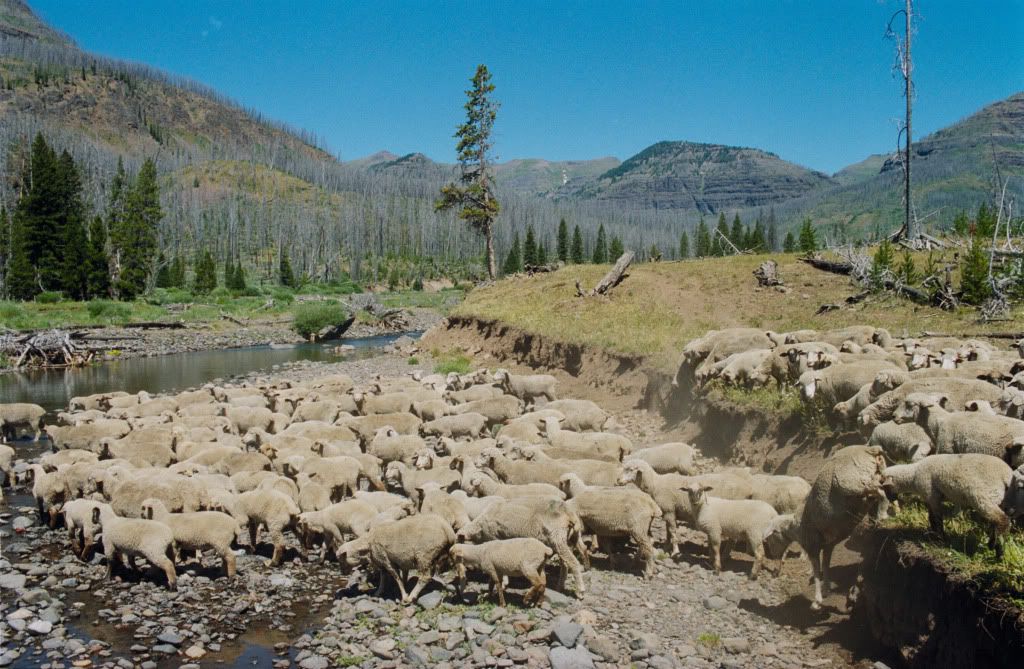
Best of the year. Easily. SWEETGRASS
The simple narrative is an obvious metaphor for cultural loss; everything about this film works so amazingly with such a minimal palette. A Mark Rothko composition throughout shifts fields of murky whites, greys, browns, and greens. The narrative and visual minimalism is echoed with a sound design of minimal human voice that is typically quiet, staticky (through walkie-talkies), abrupt, and rarely immediate to a listener, sheep bahs are more present than human voice. Hauntingly beautiful.
45365 is a look at a small Ohio town directed/constructed by two locals (good luck with your follow-up, fellas) seeming to paint a somewhat bleak picture of small town America. I'm not sure if the somewhat depressing portrait is a commentary on American economic decline or a market-driven attempt to sell a Springeresque community of curiosities, but it was a pretty fun trip.
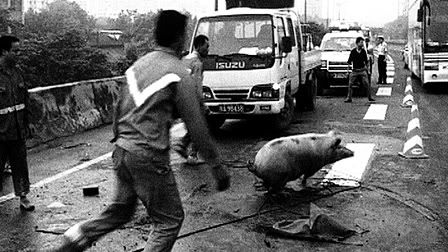
DISORDER, dystopian in spades, is a Chinese doc that compiles black & white footage from several cameras to suggest society in a downward spiral of lawless chaos. The two folks I saw this with, one an art school teacher, thought the construction was immature and excessively obvious. DISORDER doesn't seem to expose the viewer to any upper-class elements of Chinese society, perhaps suggesting that we lower-class remnants are the ones that will be left to chase scraps.
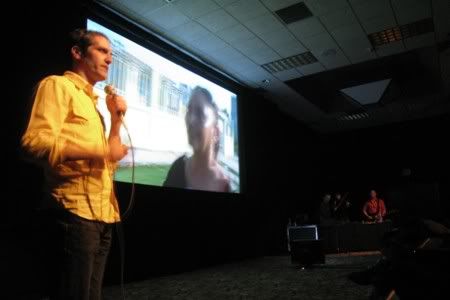
My exceptionally high expectations for UTOPIA IN FOUR MOVEMENTS went unmet (as was the case for several others who I attended the screening/performance with). Perhaps it was my appreciation for director Green's previous work on THE WEATHER UNDERGROUND or perhaps it was the promise of an interactive space shared by creators and audience, whatever it was, the event is best described as a performed power-point (though I understand the events with live music were more successful). That said, it is still a highlight from my year in docs for what it suggested as possible.
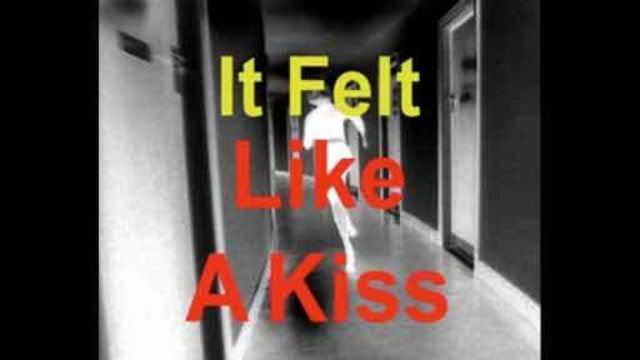
Another formally nontraditional and noteworthy doc was Adam Curtis' IT FELT LIKE A KISS. A fun cruise through images of americana completely driven by a Tarantino-esque soundtrack of old pop music is just right until you give the thesis much thought. Typical of Curtis, a grand narrative structure is created and an overwhelming cache of "evidence" is distilled into a fairly broad "argument". Nonetheless, a fun trip of archival construction.
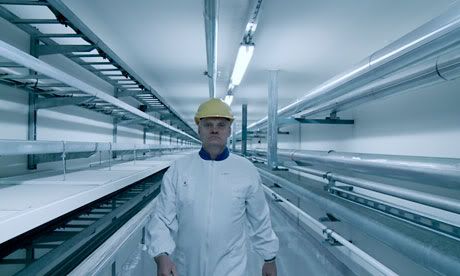
INTO ETERNITY is a magnificently shot reflection on nuclear waste, and more interestingly, about how communication might work between cultures divided by a gigantic temporal/cultural lapse. Though the compositions are often stunning, the film suffers from a sense that the entirety of the project is driven by formally balanced compositions with vibrant color schemes. The more interesting question of communication is handled sloppily with too much repetition of basic ideas and a limited array of talking heads. The questions about nuclear waste proper feel brushed aside due to the film's aesthetics as well as silly narration punctuating the film. Worth a look, but ultimately disappointing.
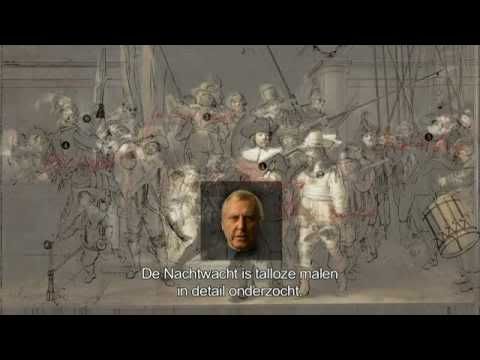
REMBRANDT'S J'ACCUSE (though I am again uncertain when I saw this (was it 2009?)) is probably my second favorite film listed here. The film is a fantastic analysis/deconstruction of Rembrandt's The Night Watch - this should be a must for all high school/college students to understand the elements of visual analysis/media literacy.
THE COVE does a great job of selling a "left argument" (because - horror - it doesn't support an unregulated dolphin market or deceitful government) by both following a personal story as well as creating an action adventure documentary.
GasLand, another personal story, here the activist-narrator-director Josh Fox road-trips The States to illustrate the pervasiveness of problems linked to natural gas exploration (in the form of fracking). Fox has an Arlo Guthrie-esque populist appeal reinforced by his conversations with "normal folk" that are experiencing problems due to Big Energy doing what it wants, where it wants.
NO CROSSOVER: THE TRIAL OF ALLEN IVERSON was a compelling look at how sports permeates society and how (primarily) race and (to an extent) class inform our daily interactions. James not only revisits a high school court case involving Allen Iverson with the archive of local and national feedback, but also talks to contemporary town residents (his hometown, notably leaning on his father) to underscore how something nearly 20 years old continues to define many lives today.
WASTE LAND - a look at Brazillian born US artist Vik Muniz and his project in the world's largest garbage dump in his homeland near Rio. The most emotionally wrenching of the bunch, also giving us the problematically uplifting narrative strands that the film is seemingly aware of as it is rooted in class (and "first world" vs "third world") commentary - a must see.
LAST TRAIN HOME, year-end favorite, is a solid, though fairly obvious, doc that looks at the pressures of globalization on a Chinese family. Age-old Salt of the Earth predicament of the weaker getting picked-on and pressured by the also-but-not-as-weak. Here, the middle generation of three has left the countryside - as much of the country has, we are led to believe - to work in a factory-town effectively on another planet.
THE OATH, another key year-end favorite, is an interesting enough story but it left me cold. I think it was early in its festival life that I heard someone say something about THE OATH also being an oath between film-maker and subject, I didn't get that at all, and perhaps that expectation sitting in the back of my mind generated some sense of disappointment. Here, the story unnecessarily leaves Jandal to occasionally tie-in to Hamdan, and sure their connection seems ripe, but I was unconvinced that it added anything.
RESTRPO, kissing cousin of THE OATH and a lesser year-end favorite, is another underwhelming doc that I can't quite figure the love for. Certainly the general circumstance of the film is interesting, in a sadistically voyeuristic kind of way, but the film itself otherwise offers nothing new or special. The film contains everything one would expect of such a film, offered in exactly the way that it would be expected to be delivered. As "embedded journalists" have the all the rage since Gulf War I, I'm not convinced that aspect of RESTRPO makes any commentary on that fact or offers anything new. Instead we are left with a mutedly jingoistic portrait of soldiers at war - muted warts and all.
WILLIAM KUNSTLER: DISTURBING THE UNIVERSE. I'm not sure if the mood hit me just right for this one, but I found this a powerfully well-told personal and social story. I keep meaning to revisit this one as I came out of the theatre in love, but my memory of the picture proper is a bit foggy, I reckon it had something to do with a romantic representation of doing social justice work, doing the work with movements of others, and getting some results. Today, that kind of activism seems to be left to Ditto-heads and Tea-baggers.
CATFISH is one of the few docs that I find morally reprehensible. The makers want us to believe that their citified ways leave them naive enough to believe that (a) the person on the other side of an internet connection might not be who they purport to be <GASP>, and (b) that the audience is gullible enough not to question this as a stunt. The immorality of it all comes in as they set-up "a simple woman and her simple family" as suckers to play out the premise. Not since CAPTURING THE FRIEDMANS has such an abomination garnered so much praise and attention. Disgusting.
I'M STILL HERE - for some reason I was quite charmed by the Affleck/Phoenix film. I think I wanted to believe less of it was a set-up than it probably was, but it is still a damning - though obvious - report on celebrity culture. There is an element of who cares? to all of it and the subtext of complaint that the famous ought to be left alone to live their lives in peace is irritating - I don't imagine it would hold up well to repeat viewing.
EXIT THROUGH THE GIFT SHOP is a more nuanced version of the previous two films - the creation of celebrity and glass-house nature of wealth and status. This is another film that I don't have a very good recall of, I remember enjoying it, but with some heavy reservations, though I'd imagine it would hold up fairly well.
VIDEOCRACY (skipping back a moment to I'M NOT HERE) offers a similar cultural critique of celebrity culture, but this time of Italy's tee-vee empire of President Burlusconi - the pop politics of empty-headed followers of empty rhetoric and empty promises. The film seems to want to make the case that we are on the edge of a society that looks similar to Mike Judge's IDIOCRACY. While marginally entertaining, it doesn't do a very good job of making or sustaining an argument, and several organizing themes play out exceptionally weak.
THE MIRROR - I'm not sure it was very good, but there was something about its mood that continues to resonate. A film about a small, Italian, mountainous community that decides to install a giant mirror to bring some extra light into their otherwise sun-challenged location. We get a glimpse of some town personalities and sub-communities, but not in an illuminating way. Just something about this one, probably tied into an idea of hopefulness and community, but I'm not very confident in recommending it.
BOXING GYM - of the four portraits of place (SWEETGRASS, 45365, and DISORDER), I think this one was the least interesting and most obvious, though solid, and sometimes profound. I think I'll soon do a Wiseman immersion and comment more fully on his body of work.
CROPSEY does a nice job of not spelling everything out, while the film-makers suggest at points their own "Cropsey" is a "bad guy", they leave the question open enough to allow us to question the mean-making going on with a varied pool of subjects.
AND EVERYTHING IS GOING FINE was fine. The problem was expectations were at least there for something better-than-average coming from Soderbergh looking at Spalding Gray. The doc is a matter-of-fact editing together of archival material (personal and public) of Gray, Soderbergh seemingly wanting to leave himself out as much as possible. Unfortunately, Gray's widow spoke after the screening I attended and it felt that the film was conceived by her as a marketing ploy to make Gray's legacy more monetizable and her admitting that she had approached other "higher profile" directors (Scorsese, I believe was mentioned) made it seem that Soderbergh perhaps took the project as a favor to the deceased and perhaps to slow the seemingly self-interested widow. Drag.
THE INVENTION OF DR. NAKAMATS was an uninteresting and poorly constructed look at the Japanese inventor. At least there was some decent title-work (though that was somewhat irritating as the rest of the film was so poor that it seemed that the fact of a good bit of title-work had justified the visibility of this film).
This small group of docs did little for me, though they all had worthwhile attributes, probably in this order: NoBody's PERFECT, PRODIGAL SONS, TAPPED, FLOORED, and DEFAMATION.
My last film to note is one of two docs this year that I actively disliked, the aggresively hipsteresque and utterly self-congratulatory THE RED CHAPEL. I had meant to write a diatribe against this when I saw it but decided it would be a waste of my time for something so worthless.
I'm sure I am forgetting many films I wish I would have seen to add for consideration but few are coming to me. MARWENCOL, THE ARBOR, THE KIDS GROW UP (love Block's 51 BIRCH, am probably on of few who prefers Block to McElwee), 12th & DELAWARE, JACKASS 3D, also two Bennings came through town this year that I missed - RR and RUHR (which may or may not be considered 2010s).
With this little exercise in reflection I am noticing that I thought little of many films that many thought much of. While there is the possibility I am hyper-critical and/or missing something, it occurs to me that many of these lists are coming from folks in the profession - film-makers, festival wonks, even some more established critics. It seems that there might be an element of self-promotion/self-sustaining in spreading the love out so thinly. Also, it might be the case that many of these folks are so immersed in so many films that the sheer volume of mediocre film they are exposed to creates a stockholm syndrome effect where they begin to believe that the top films are actually good because the mediocre films are so many.
Roughly:
****sublime****
SWEETGRASS
***noteworthy/very good***
Rembrandt's J'Accuse
45365
Waste Land
William Kunstler: Disturbing the Universe
Utopia in Four Movements
**solid/good/maybe-even-very-good**
Last Train Home
The Cove
Boxing Gym
Disorder
It Felt Like a Kiss
Exit Through the Gift Shop
GasLand
Cropsey
*good, though with substantial problems*
I'm Still Here
Into Eternity
No Crossover: The Trial of Allen Iverson
The Oath
The Mirror
And Everything Is Going Fine
Restrepo
1/2*pedestrian1/2*
NoBody's Perfect
Prodigal Sons
Tapped
Floored
Defamation
Videocracy
-very troubled-
The Invention of Dr. Nakamats
--just plain bad--
The Red Chapel
---immoral---
Catfish
Perhaps I will write more on (some of) these later.
Best of the year. Easily. SWEETGRASS
 |
| Sweetgrass |
The simple narrative is an obvious metaphor for cultural loss; everything about this film works so amazingly with such a minimal palette. A Mark Rothko composition throughout shifts fields of murky whites, greys, browns, and greens. The narrative and visual minimalism is echoed with a sound design of minimal human voice that is typically quiet, staticky (through walkie-talkies), abrupt, and rarely immediate to a listener, sheep bahs are more present than human voice. Hauntingly beautiful.
 |
| 45365 |
 |
| Disorder |
DISORDER, dystopian in spades, is a Chinese doc that compiles black & white footage from several cameras to suggest society in a downward spiral of lawless chaos. The two folks I saw this with, one an art school teacher, thought the construction was immature and excessively obvious. DISORDER doesn't seem to expose the viewer to any upper-class elements of Chinese society, perhaps suggesting that we lower-class remnants are the ones that will be left to chase scraps.
 |
| Utopia in Four Movements |
 |
| It Felt Like a Kiss |
 |
| Into Eternity |
 |
| Rembrandt's J'Accuse |
THE COVE does a great job of selling a "left argument" (because - horror - it doesn't support an unregulated dolphin market or deceitful government) by both following a personal story as well as creating an action adventure documentary.
GasLand, another personal story, here the activist-narrator-director Josh Fox road-trips The States to illustrate the pervasiveness of problems linked to natural gas exploration (in the form of fracking). Fox has an Arlo Guthrie-esque populist appeal reinforced by his conversations with "normal folk" that are experiencing problems due to Big Energy doing what it wants, where it wants.
NO CROSSOVER: THE TRIAL OF ALLEN IVERSON was a compelling look at how sports permeates society and how (primarily) race and (to an extent) class inform our daily interactions. James not only revisits a high school court case involving Allen Iverson with the archive of local and national feedback, but also talks to contemporary town residents (his hometown, notably leaning on his father) to underscore how something nearly 20 years old continues to define many lives today.
WASTE LAND - a look at Brazillian born US artist Vik Muniz and his project in the world's largest garbage dump in his homeland near Rio. The most emotionally wrenching of the bunch, also giving us the problematically uplifting narrative strands that the film is seemingly aware of as it is rooted in class (and "first world" vs "third world") commentary - a must see.
LAST TRAIN HOME, year-end favorite, is a solid, though fairly obvious, doc that looks at the pressures of globalization on a Chinese family. Age-old Salt of the Earth predicament of the weaker getting picked-on and pressured by the also-but-not-as-weak. Here, the middle generation of three has left the countryside - as much of the country has, we are led to believe - to work in a factory-town effectively on another planet.
THE OATH, another key year-end favorite, is an interesting enough story but it left me cold. I think it was early in its festival life that I heard someone say something about THE OATH also being an oath between film-maker and subject, I didn't get that at all, and perhaps that expectation sitting in the back of my mind generated some sense of disappointment. Here, the story unnecessarily leaves Jandal to occasionally tie-in to Hamdan, and sure their connection seems ripe, but I was unconvinced that it added anything.
RESTRPO, kissing cousin of THE OATH and a lesser year-end favorite, is another underwhelming doc that I can't quite figure the love for. Certainly the general circumstance of the film is interesting, in a sadistically voyeuristic kind of way, but the film itself otherwise offers nothing new or special. The film contains everything one would expect of such a film, offered in exactly the way that it would be expected to be delivered. As "embedded journalists" have the all the rage since Gulf War I, I'm not convinced that aspect of RESTRPO makes any commentary on that fact or offers anything new. Instead we are left with a mutedly jingoistic portrait of soldiers at war - muted warts and all.
WILLIAM KUNSTLER: DISTURBING THE UNIVERSE. I'm not sure if the mood hit me just right for this one, but I found this a powerfully well-told personal and social story. I keep meaning to revisit this one as I came out of the theatre in love, but my memory of the picture proper is a bit foggy, I reckon it had something to do with a romantic representation of doing social justice work, doing the work with movements of others, and getting some results. Today, that kind of activism seems to be left to Ditto-heads and Tea-baggers.
CATFISH is one of the few docs that I find morally reprehensible. The makers want us to believe that their citified ways leave them naive enough to believe that (a) the person on the other side of an internet connection might not be who they purport to be <GASP>, and (b) that the audience is gullible enough not to question this as a stunt. The immorality of it all comes in as they set-up "a simple woman and her simple family" as suckers to play out the premise. Not since CAPTURING THE FRIEDMANS has such an abomination garnered so much praise and attention. Disgusting.
I'M STILL HERE - for some reason I was quite charmed by the Affleck/Phoenix film. I think I wanted to believe less of it was a set-up than it probably was, but it is still a damning - though obvious - report on celebrity culture. There is an element of who cares? to all of it and the subtext of complaint that the famous ought to be left alone to live their lives in peace is irritating - I don't imagine it would hold up well to repeat viewing.
EXIT THROUGH THE GIFT SHOP is a more nuanced version of the previous two films - the creation of celebrity and glass-house nature of wealth and status. This is another film that I don't have a very good recall of, I remember enjoying it, but with some heavy reservations, though I'd imagine it would hold up fairly well.
VIDEOCRACY (skipping back a moment to I'M NOT HERE) offers a similar cultural critique of celebrity culture, but this time of Italy's tee-vee empire of President Burlusconi - the pop politics of empty-headed followers of empty rhetoric and empty promises. The film seems to want to make the case that we are on the edge of a society that looks similar to Mike Judge's IDIOCRACY. While marginally entertaining, it doesn't do a very good job of making or sustaining an argument, and several organizing themes play out exceptionally weak.
THE MIRROR - I'm not sure it was very good, but there was something about its mood that continues to resonate. A film about a small, Italian, mountainous community that decides to install a giant mirror to bring some extra light into their otherwise sun-challenged location. We get a glimpse of some town personalities and sub-communities, but not in an illuminating way. Just something about this one, probably tied into an idea of hopefulness and community, but I'm not very confident in recommending it.
BOXING GYM - of the four portraits of place (SWEETGRASS, 45365, and DISORDER), I think this one was the least interesting and most obvious, though solid, and sometimes profound. I think I'll soon do a Wiseman immersion and comment more fully on his body of work.
CROPSEY does a nice job of not spelling everything out, while the film-makers suggest at points their own "Cropsey" is a "bad guy", they leave the question open enough to allow us to question the mean-making going on with a varied pool of subjects.
AND EVERYTHING IS GOING FINE was fine. The problem was expectations were at least there for something better-than-average coming from Soderbergh looking at Spalding Gray. The doc is a matter-of-fact editing together of archival material (personal and public) of Gray, Soderbergh seemingly wanting to leave himself out as much as possible. Unfortunately, Gray's widow spoke after the screening I attended and it felt that the film was conceived by her as a marketing ploy to make Gray's legacy more monetizable and her admitting that she had approached other "higher profile" directors (Scorsese, I believe was mentioned) made it seem that Soderbergh perhaps took the project as a favor to the deceased and perhaps to slow the seemingly self-interested widow. Drag.
THE INVENTION OF DR. NAKAMATS was an uninteresting and poorly constructed look at the Japanese inventor. At least there was some decent title-work (though that was somewhat irritating as the rest of the film was so poor that it seemed that the fact of a good bit of title-work had justified the visibility of this film).
This small group of docs did little for me, though they all had worthwhile attributes, probably in this order: NoBody's PERFECT, PRODIGAL SONS, TAPPED, FLOORED, and DEFAMATION.
My last film to note is one of two docs this year that I actively disliked, the aggresively hipsteresque and utterly self-congratulatory THE RED CHAPEL. I had meant to write a diatribe against this when I saw it but decided it would be a waste of my time for something so worthless.
I'm sure I am forgetting many films I wish I would have seen to add for consideration but few are coming to me. MARWENCOL, THE ARBOR, THE KIDS GROW UP (love Block's 51 BIRCH, am probably on of few who prefers Block to McElwee), 12th & DELAWARE, JACKASS 3D, also two Bennings came through town this year that I missed - RR and RUHR (which may or may not be considered 2010s).
With this little exercise in reflection I am noticing that I thought little of many films that many thought much of. While there is the possibility I am hyper-critical and/or missing something, it occurs to me that many of these lists are coming from folks in the profession - film-makers, festival wonks, even some more established critics. It seems that there might be an element of self-promotion/self-sustaining in spreading the love out so thinly. Also, it might be the case that many of these folks are so immersed in so many films that the sheer volume of mediocre film they are exposed to creates a stockholm syndrome effect where they begin to believe that the top films are actually good because the mediocre films are so many.
Roughly:
****sublime****
SWEETGRASS
***noteworthy/very good***
Rembrandt's J'Accuse
45365
Waste Land
William Kunstler: Disturbing the Universe
Utopia in Four Movements
**solid/good/maybe-even-very-good**
Last Train Home
The Cove
Boxing Gym
Disorder
It Felt Like a Kiss
Exit Through the Gift Shop
GasLand
Cropsey
*good, though with substantial problems*
I'm Still Here
Into Eternity
No Crossover: The Trial of Allen Iverson
The Oath
The Mirror
And Everything Is Going Fine
Restrepo
1/2*pedestrian1/2*
NoBody's Perfect
Prodigal Sons
Tapped
Floored
Defamation
Videocracy
-very troubled-
The Invention of Dr. Nakamats
--just plain bad--
The Red Chapel
---immoral---
Catfish
Perhaps I will write more on (some of) these later.
Subscribe to:
Posts (Atom)